


























The UAE combines nearly every risk factor: road surfaces at 60–70°C, long high-speed highway runs, heavily loaded family SUVs, sand and gravel shoulders, and cars parked for months in direct sun. Understanding how each failure develops lets you spot it early and replace the tyre before it lets go at 120 km/h.
Heat blowouts start inside the casing
A heat blowout happens when the temperature inside a tyre rises high enough to weaken the bond between rubber and steel belts, causing the tread to separate or the casing to burst. Running temperature depends on pressure, load, speed and road heat, and in a UAE summer all four can stack up at once.
The typical pattern is a family SUV, loaded for a trip, running at 130–140 km/h in the early afternoon on tyres a few PSI low. The tyre does not fail immediately; it overheats for an hour, the belt bond weakens, and the tread peels away. Correct cold pressure, respecting load limits, and choosing tyres with a high temperature grade are the main defences.
- Peak risk: hot afternoons, high speed, full load, low pressure
- Warning signs: vibration that builds with speed, a burning rubber smell, a TPMS warning
- If a tyre bursts: grip the wheel, ease off the accelerator, do not brake hard, steer gently to the shoulder
Underinflation is the single biggest cause
A tyre that is 20 percent underinflated, for example 26 PSI instead of 32, flexes far more on every rotation and runs significantly hotter. It also wears both outer shoulders faster than the centre, and its sidewall can crack where it flexes.
Underinflation often creeps in without the driver noticing, because tyres lose pressure naturally, and a slow leak from a nail or a corroded valve can take weeks to show. Older cars without TPMS give no warning at all. A monthly pressure check is the cheapest and most effective way to prevent a tyre failure.
Age and dry rot weaken rubber even with deep tread
Rubber ages chemically from the day it is made, as oxygen, ozone, UV and heat break down the compounds that keep it flexible, a process often called dry rot. Fine cracks first appear on the sidewall and in the tread grooves, then deepen until they reach the cords.
A tyre that has covered few kilometres can still be dangerous. Cars that sit for months in outdoor parking during summer travel, and spare tyres that never touch the road, are common examples. In the UAE, tyres more than five years past their DOT date are commonly rejected at inspection, and many manufacturers recommend replacing any tyre at ten years regardless of appearance.
Impact bulges mean the internal cords are broken
A bulge on a tyre sidewall is a sign that the internal cords have snapped and only the outer rubber is holding the air, so the tyre can burst at any time. It is usually caused by hitting a kerb, pothole or sharp-edged speed bump, which pinches the sidewall between the rim and the obstacle.
Low-profile tyres are most vulnerable because there is less sidewall to cushion the hit. A bulge cannot be repaired. Replace the tyre, check the rim for bends or cracks, and have the alignment checked, since an impact hard enough to break cords can also move suspension angles.
Overloading pushes tyres beyond their rated capacity
Every tyre has a maximum load set by its load index, and carrying more weight than that, especially at high speed in heat, sharply increases flexing and internal temperature. Family trips with seven passengers and luggage, pickups carrying building materials, and vans packed for deliveries are the usual culprits.
The fix is to use tyres with the correct load index, raise pressures to the full-load value on the placard, and spread weight evenly. Fitting passenger tyres on a pickup or van that regularly carries heavy loads is a common mistake; light-truck LT or commercial C tyres are built for it.
Neglected punctures turn into failures
A nail or screw in the tread rarely causes an immediate failure, but driving on it for weeks lets moisture reach the steel belts and allows a slow leak to underinflate the tyre. Many drivers keep topping up a tyre that loses air every few days, unaware that it is running hot between top-ups.
Repair punctures promptly with a proper internal patch-plug, which seals the inner liner and fills the injury channel. Repairs are only safe in the central tread area, for holes up to about 6 mm, and never on the sidewall or shoulder. A tyre that has been driven completely flat usually has damaged inner walls and must be replaced.
Wear patterns reveal alignment and pressure faults
The way a tyre wears tells you exactly what is wrong with the car. Reading the pattern early can save the other tyres and catch a suspension fault before it becomes expensive.
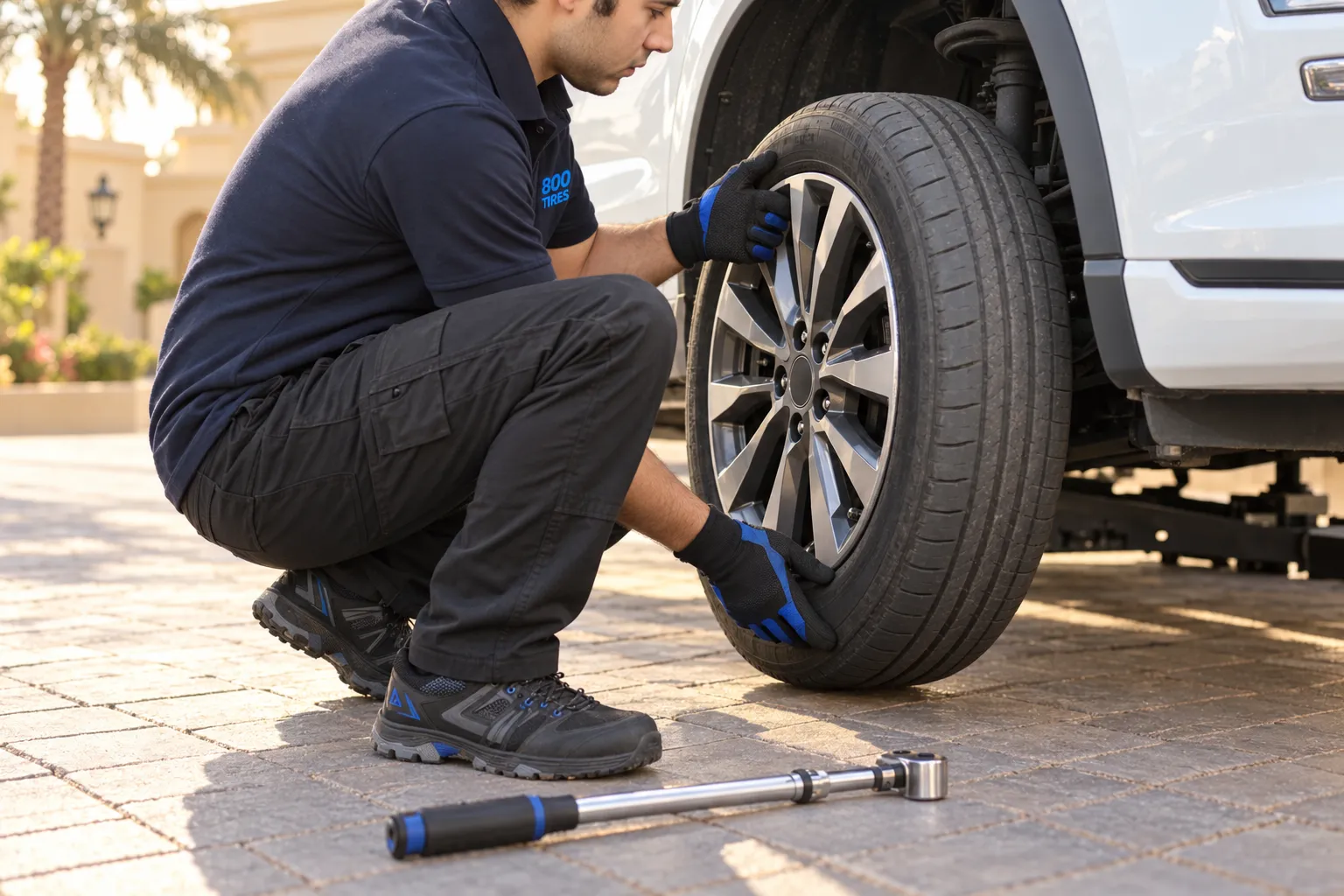
Inner-edge wear, common on cars that hit speed bumps hard, is the most dangerous because it hides on the side you cannot see; it can wear through to the steel cords while the outer edge still looks fine. Check the inner shoulder with a hand or a torch when the wheels are turned to full lock.
- Both edges worn: underinflation
- Centre worn: overinflation
- One edge worn: camber out of specification
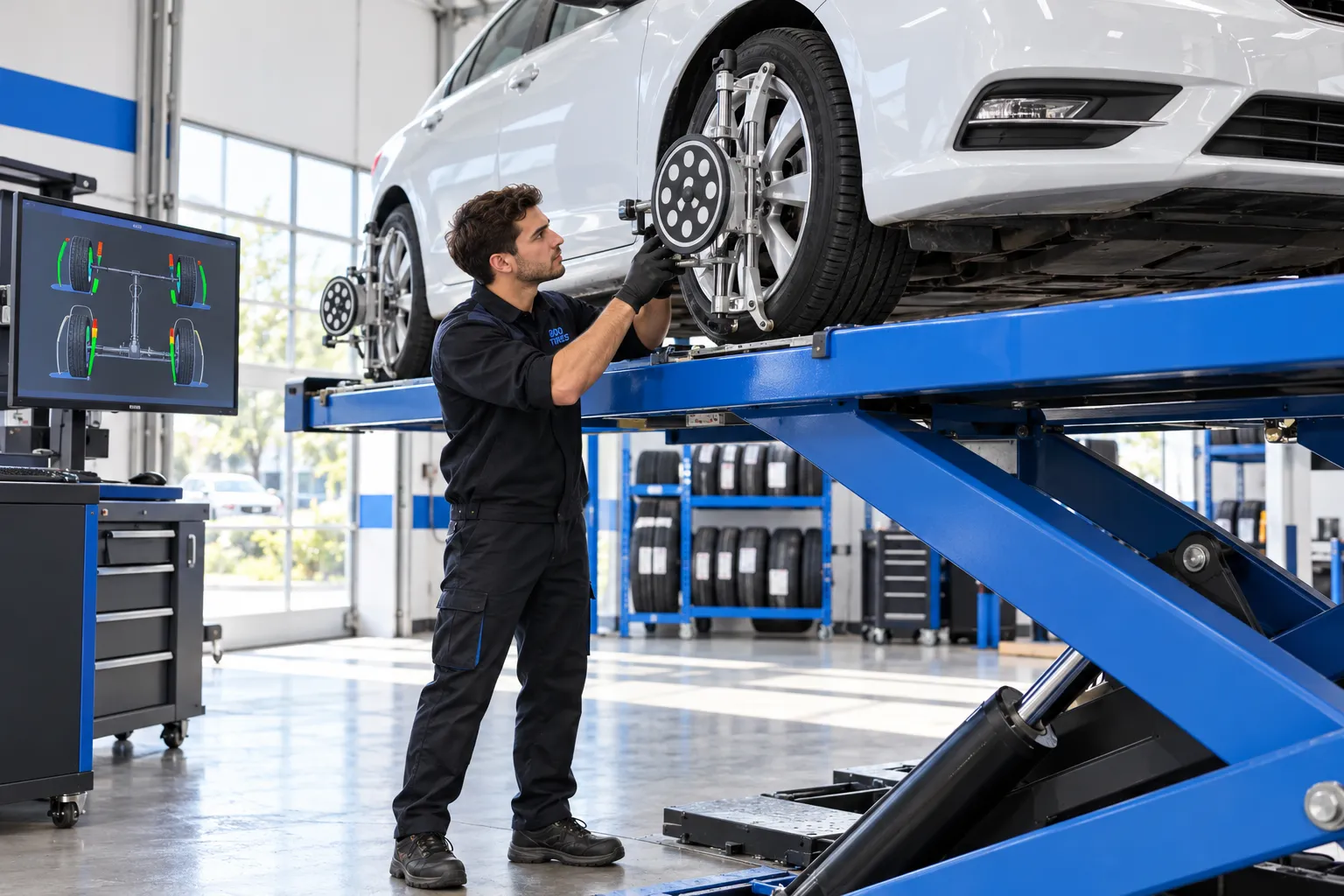
- Feathered, saw-tooth blocks: incorrect toe setting
- Cupped or scalloped patches: worn shock absorbers or imbalance
Valve, bead and rim problems cause slow losses
Not every air leak comes from the tread; perished rubber valve stems, corroded TPMS sensor valves and corroded or bent rim beads are frequent causes of slow pressure loss in the UAE. Heat hardens rubber valves until they crack at the base, and salty coastal air or sand corrode alloy rims where the tyre bead seats.
A new valve should be fitted with every new tyre. If a tyre loses air with no visible puncture, a soapy water test around the valve, bead and tread usually finds the source, and a cleaned and sealed bead often cures the leak.