


























A flat tyre is usually caused by a slow leak from a nail, screw or failed valve, and most can be fixed on the spot if the damage is in the tread and the tyre was not driven on while flat. Our mobile technician drives to wherever the car is parked in Dubai, Abu Dhabi or Sharjah, inspects the tyre inside and out, and tells you plainly whether it can be repaired or needs replacing.
The most important decision is made before any tool comes out: a tyre that has been driven even a few hundred metres with no air can have a crushed inner sidewall that looks fine from outside. We break the bead and check the inner liner when there is any doubt, because a repair on a heat-damaged carcass is a blowout risk on a 45°C afternoon on the E11.
If the tyre is repairable we fix it, re-inflate to the door-placard pressure and check the other three. If it is not, we can fit your spare or supply a new tyre in the same size from the van or by the next visit. The price is confirmed on WhatsApp once you share a photo of the tyre and its size.
What a flat tyre fix costs in the UAE
The cost of a flat tyre depends far more on whether the tyre can be saved than on the repair itself. A simple tread puncture is the cheapest outcome; a tyre that was driven flat and destroyed means buying a new one, which ranges from roughly AED 200 for a budget 15-inch tyre to well over AED 1,000 for a premium 20-inch run-flat.
With a mobile service you also avoid the hidden costs of the alternative: a tow truck to a workshop, a taxi home, and a half day lost. We confirm the price on WhatsApp after seeing the size and a photo, so there is no surprise at the car.
- Cheapest: nail or screw in the tread, tyre not driven flat
- Mid: valve or bead leak needing a new valve and bead sealing
- Highest: sidewall damage or run-flat damage needing a new tyre
Why you should stop driving on a flat immediately
Driving on a flat tyre for even one kilometre can fold the sidewall over on itself and grind the inner rubber into dust, turning a cheap repair into a new tyre. The rim can also be bent or scraped on kerbs, and on cars with alloy wheels a damaged rim lip often leaks permanently.
In UAE summer the risk is greater: an underinflated tyre flexes more, and on road surfaces that reach 60–70°C the carcass overheats quickly. Pull over somewhere safe, switch on hazards, and request help rather than limping to the next petrol station.
What happens when the technician arrives
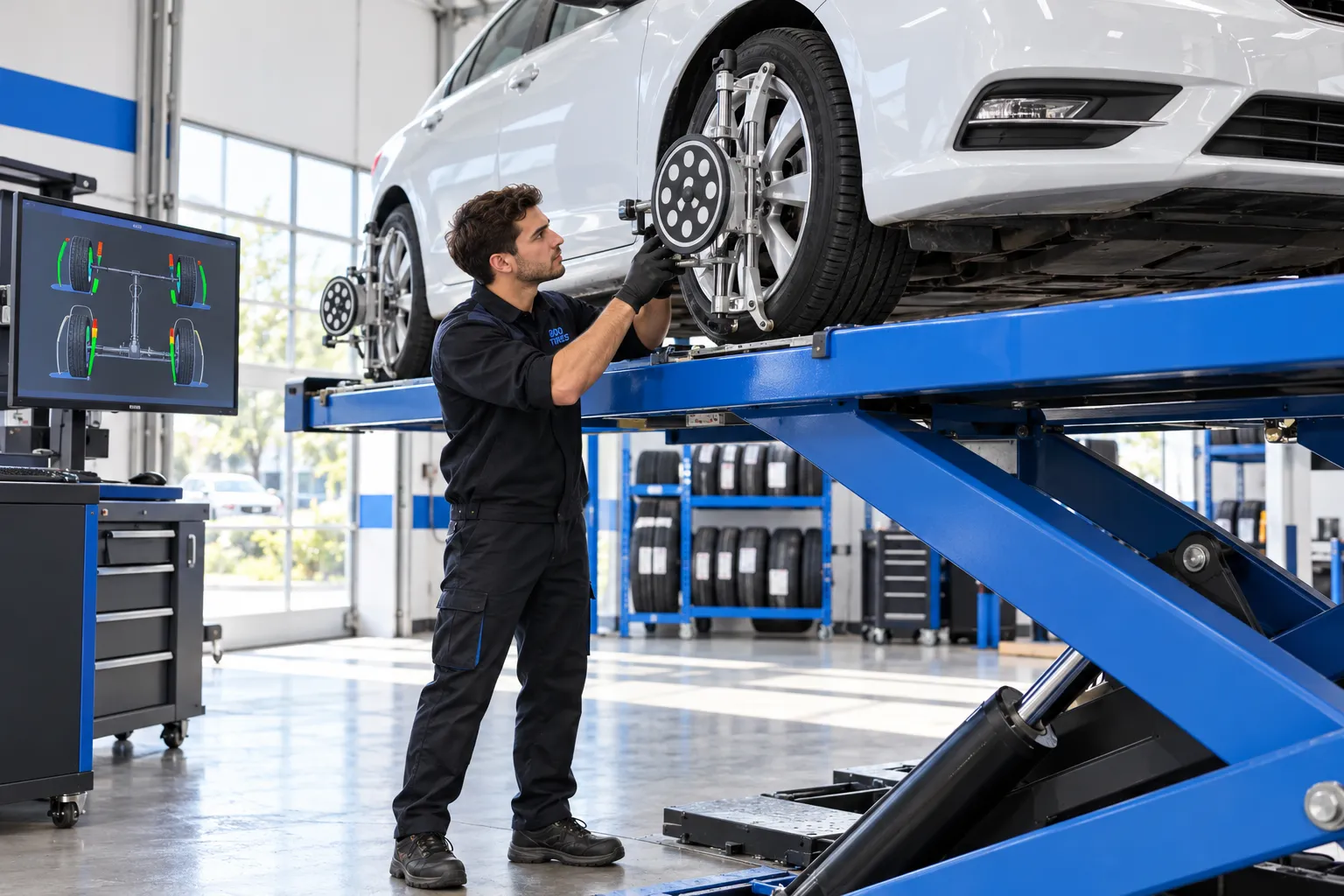
A typical flat tyre visit takes 20–40 minutes from arrival to driving away. The technician jacks the car at the correct lift point, removes the wheel, and dunks or sprays it to find every leak, because some flats have more than one source, such as a nail plus a corroded valve.
If you are in a basement car park or a villa driveway, the van carries a compressor, a cordless impact wrench and repair kits, so nothing needs to leave the site. You do not have to be standing next to the car if building security can give access and you have shared the key arrangement.
Tyre sealant cans: when they help and when they hurt
Aerosol tyre sealant will usually seal a small tread hole for a short emergency drive, but it coats the inside of the tyre and can damage TPMS sensors. Many cars sold in the UAE without a spare ship with a sealant kit for exactly this reason.
If you have used sealant, tell the technician. The tyre must be broken down and cleaned before a proper repair, and the TPMS sensor checked for blockage. Sealant is a way to reach safety, not a permanent fix.