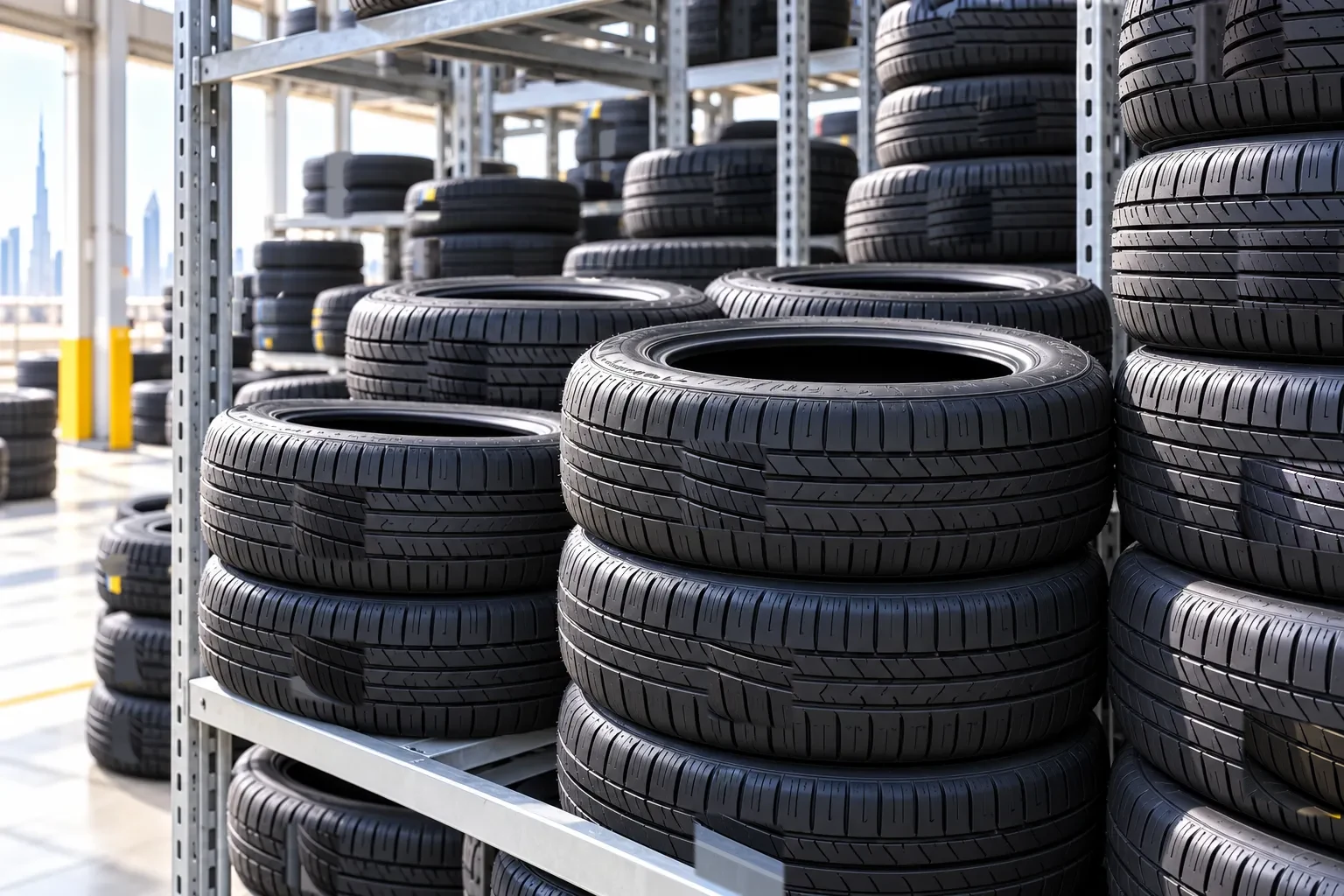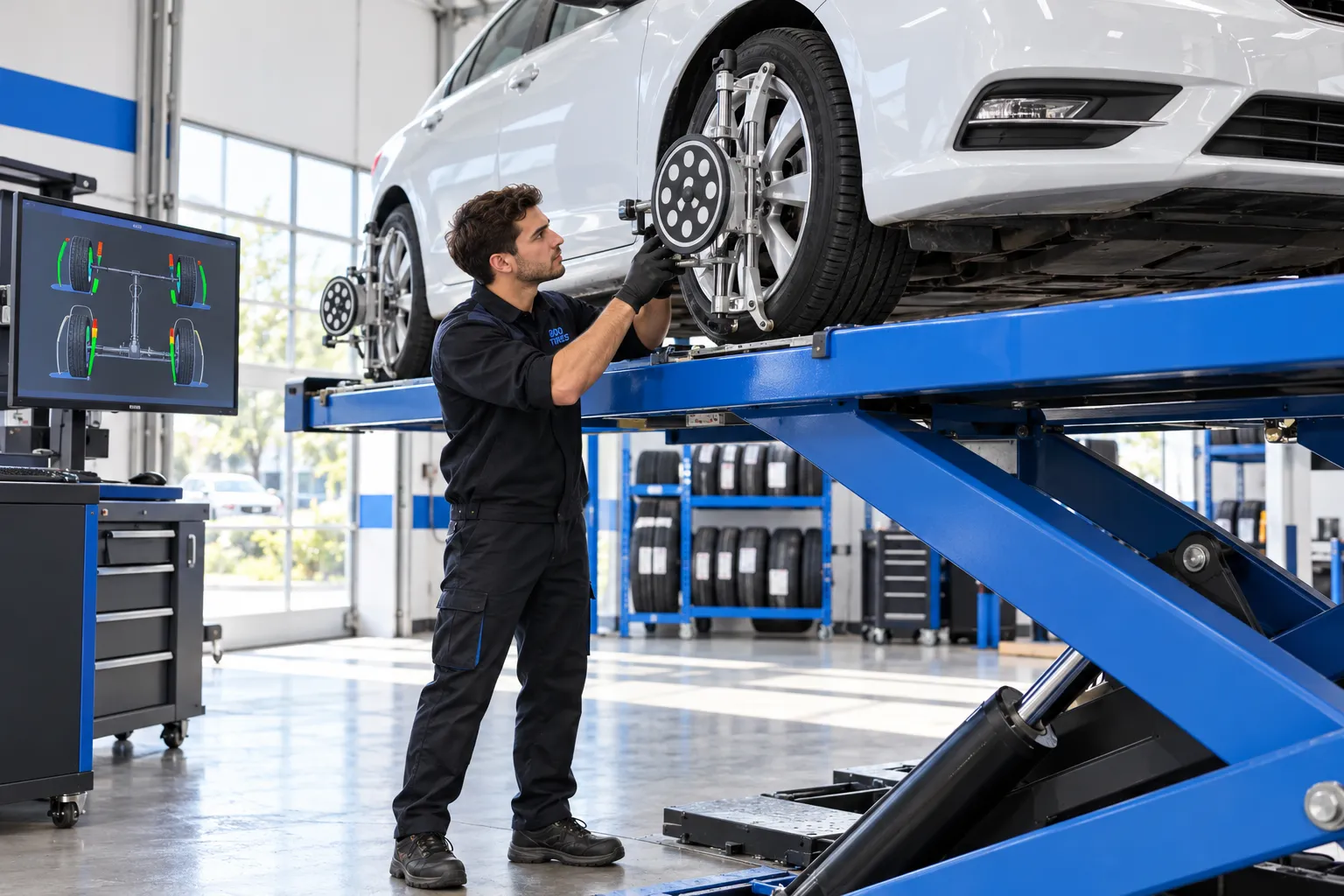



























A tyre pressure check measures each tyre with a calibrated gauge and corrects it to the value on your door placard, and our mobile visit from AED 100 includes a nitrogen or air top-up for all four tyres and the spare. It is the cheapest maintenance a car can have and the one that most affects safety, fuel use and tyre life.
In the UAE, pressure swings are bigger than most drivers realise. A tyre set correctly on a 25°C winter morning can read 3–4 PSI higher after an hour on a 65°C road in July, and the same tyre can be 4 PSI low by the following December. Petrol station gauges are often inaccurate and set while the tyres are hot, which leads to underinflation once they cool.
Our technician checks pressures cold where possible, inspects tread depth and sidewalls, reads the DOT date, and tells you if anything needs attention. If a tyre keeps losing air, we find the leak.
Nitrogen vs air: the honest facts
Nitrogen leaks through tyre rubber more slowly than oxygen and contains no moisture, so tyres filled with nitrogen hold their pressure somewhat longer and show smaller swings with heat. Normal air is already about 78% nitrogen, so the benefit is real but modest.
The biggest gain from nitrogen comes from the visit itself: pressures are set correctly, cold, with an accurate gauge. A tyre with the wrong pressure performs badly whatever gas is inside it. You can mix nitrogen and air safely if you need a top-up at a petrol station.
How UAE heat changes your tyre pressure
Tyre pressure changes by roughly 1 PSI for every 5–6°C change in air temperature inside the tyre, so UAE seasons move pressure by several PSI. Between a January morning and an August afternoon the tyre can see a difference of 30°C or more before driving heat is added.
Always set pressure to the door placard value when the tyres are cold, meaning parked for at least three hours or driven less than 2 km. Never let air out of hot tyres to bring them down to the placard number; they will be underinflated once they cool.
- Check monthly and before every long trip
- Expect a 3–4 PSI rise after highway driving in summer; this is normal
- Recheck when the weather cools in November and December
What underinflation really costs
A tyre running 20% below its correct pressure can lose a significant share of its tread life and raises fuel consumption through higher rolling resistance. More importantly, it flexes and overheats, and underinflation is the leading cause of the heat-related blowouts seen on UAE highways in summer.
Underinflated tyres also lengthen braking distances and make the car slower to respond in an emergency lane change. A monthly check costs far less than one ruined tyre.
Where to find your correct pressure
Your car's correct tyre pressure is printed on a placard on the driver's door pillar, inside the fuel flap, or in the owner's manual, not on the tyre itself. The number on the tyre sidewall is the maximum the tyre can hold, not the recommended setting.
Many placards list a higher pressure for full loads or sustained high speed. If you regularly drive to Abu Dhabi or Al Ain with a full car, use the full-load figure for those trips.